Being a Hot Mess Might Be Your Greatest Dating Superpower
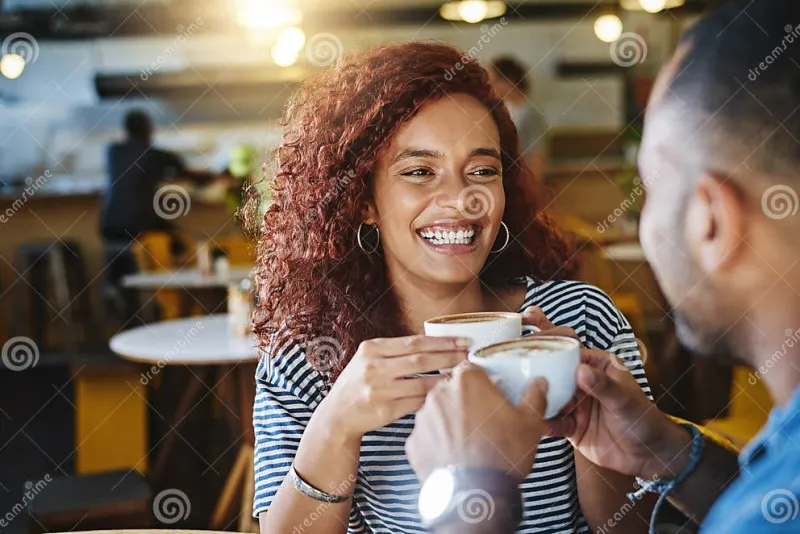
Photo: woman laughing candidly on a casual coffee date, via thumbs.dreamstime.com
We've all done it. You meet someone promising, and suddenly you're performing the most polished version of yourself — carefully curated opinions, strategically timed texts, a personal history edited down to the highlights. It feels smart. Safe. Like showing up to a job interview in your best blazer.
But here's the uncomfortable truth: that blazer might be exactly what's keeping you single.
Welcome to what researchers call the vulnerability paradox — the deeply counterintuitive idea that showing people your messy, unfinished, genuinely human self actually makes you more attractive, not less. And no, this isn't just a feel-good theory. There's real science behind it, real couples who've lived it, and a real way to do it without turning a first date into a therapy session.
Why We Hide in the First Place
Let's be honest about the fear. When you like someone, the stakes feel sky-high. You don't want to scare them off with your anxiety about your career, your complicated family situation, or the fact that you cried during a dog food commercial last Tuesday. So you package yourself. You present the version of you that seems most dateable.
Psychologist Brené Brown, whose research on vulnerability has reached millions of Americans, describes this as "armoring up" — the emotional equivalent of building a wall to protect yourself from rejection. The problem, she argues, is that the wall doesn't just keep out pain. It keeps out genuine connection, too.
When you're performing, the other person isn't falling for you. They're falling for your press release.
The Research Is Kind of a Plot Twist
Several studies in social psychology point to what's known as the pratfall effect — a phenomenon first identified by researcher Elliot Aronson in the 1960s. His findings showed that people perceived as highly competent actually became more likable when they made a small, human mistake. Spilling coffee, fumbling over words, admitting uncertainty — these moments made people feel closer, not farther away.
More recent work in attachment theory reinforces this. Couples who report the highest relationship satisfaction aren't the ones who never fight or never struggle. They're the ones who feel safe enough to show struggle to each other. That safety, researchers say, begins in early dating — in the small moments when someone reveals something real and the other person doesn't run.
In other words, vulnerability isn't a risk you take after you build trust. It's often how trust gets built in the first place.
Real People, Real Stories
Take Marcus and Diane, a couple from Chicago who met on a dating app three years ago. On their second date, Marcus — who'd been rehearsing charming stories all week — accidentally blurted out that he was still figuring out what he wanted to do with his life at 34 and felt embarrassed about it. He expected the date to nosedive.
Instead, Diane laughed and said, "Oh thank God, me too."
They've been together ever since.
Or consider Priya, a 29-year-old from Austin who spent two years crafting a dating profile that made her life look effortlessly exciting. She got plenty of matches but almost no second dates. On a whim, she rewrote her profile to mention that she was an introvert who loved quiet weekends and was still figuring out her relationship with her parents. Within a month, she matched with someone who told her he'd swiped right specifically because her profile felt "like a real person wrote it."
These aren't outliers. They're a pattern.
The Oversharing Trap (And How to Avoid It)
Before you take this as a green light to unload your entire emotional history on a first date, let's talk about the line. Because yes, there is one.
Vulnerability isn't the same as venting. There's a meaningful difference between sharing something genuine about yourself and using someone you just met as an emotional dumping ground. The goal isn't catharsis — it's connection.
Here's a simple framework to keep you on the right side of that line:
The 3-Part Vulnerability Check:
- Is it true? Not performed, not strategic — just honest.
- Is it proportional? Sharing that you're nervous on dates = appropriate. Sharing that you haven't spoken to your father in seven years = probably date three or later.
- Does it invite reciprocity? Good vulnerability opens a door. It says, I showed you something real — your turn if you want. It doesn't demand anything back.
Think of it less like confessing and more like gently pulling back a curtain. You're not swinging the doors wide open. You're just letting a little light in.
What You're Really Signaling
When you let someone see a genuine flaw or uncertainty, you're not signaling weakness. You're signaling something far more attractive: security. You're showing that you don't need to be perfect to feel worthy of love. That's actually a pretty rare and compelling quality in the dating world, where so many people are white-knuckling their way through every interaction.
It also signals emotional maturity — the kind that suggests you'll be a real partner, not just a good date. And for anyone who's serious about finding something lasting, that matters enormously.
A Small Challenge for Your Next Date
Try this: at some point in your next date or early conversation with someone you're interested in, share one small, genuine thing that isn't in your polished dating narrative. It doesn't have to be dramatic. Maybe it's admitting you're nervous. Maybe it's mentioning a hobby you're embarrassed about. Maybe it's acknowledging that you've had a weird week.
Then notice what happens. Does the conversation get warmer? Does the other person open up too?
Chances are, it does. Because here's what most of us forget: the person sitting across from you is also performing. Also scared. Also secretly relieved when someone else goes first.
Your mess isn't a liability. It's an invitation. And the right person? They'll RSVP every time.